
Ayurvedic Treatment for Skin Diseases in Kerala
Physician-led Ayurvedic treatment for Skin Diseases in Kerala. Every plan starts with a consultation and combines classical therapies, herbal medicines, dietary guidance, and a daily routine suited to the individual.
- Chief Physician Dr. Salini L S, BAMS
- Sasthamangalam, Trivandrum
- OP 10:00 AM to 4:00 PM
- Online consultation available
Ayurvedic Treatment for Skin Diseases in Kerala at Our Trivandrum Centre
Ayurvedic treatment for skin diseases in Kerala combines external herbal medicine applications with internal medication, chosen after the physician examines you. Treatment plans differ for each skin disease, and the therapies, medicines and number of days are decided only after the doctor sees you.
The skin is the body’s first line of defence, which is why it is prone to infections and other issues. Eczema, psoriasis, acne and rosacea can all cause itching. The most commonly prescribed corticosteroid creams can have side effects with long-term use, so many people look for gentler, skin-friendly care.
Ayurveda offers that care through a holistic approach. It looks for the root cause inside the body, works on blood purification and digestion, and uses personalised herbal medicines to manage skin diseases naturally and over the long term.
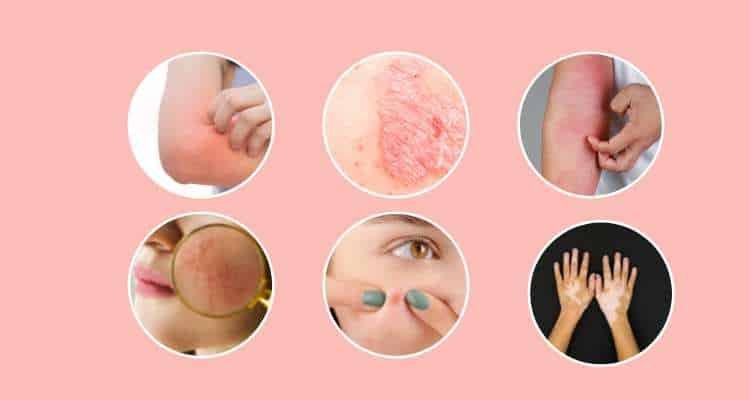
Skin Conditions We Treat
Our doctors treat a wide range of skin conditions and skin diseases with Ayurvedic treatments, from acne and dry skin to chronic skin conditions such as psoriasis, eczema and vitiligo. Select a condition to read how Ayurveda approaches it.
Whiteheads, blackheads, pimples and cysts
Dark patches, usually on the face
Rough, flaky or scaly skin (xerosis)
Itchy red bumps from an allergic reaction
Facial flushing, redness and bumps
Flaking, redness and itching
Intensely itchy infestation
Allergic and irritant contact dermatitis
Rashes after touching chemicals or plants
Flat, purple bumps that itch
Sores and blisters from the herpes simplex virus
Silvery, scaly patches on scalp, elbows and knees
Itchy blisters on palms and soles
Deep fissures on the heels
Circular fungal rash
Loss of skin colour in patches
Patchy hair loss on the scalp or face
What Ayurveda Says About Skin Diseases
Ayurveda is a system of medicine based on the principle of balance in the body. According to Ayurveda, skin diseases appear when the three doshas (Vata, Pitta and Kapha) and the dhatus (body tissues) go out of balance, and when these imbalances leave the blood (rakta) vitiated by accumulated toxins (ama). Classical Ayurvedic texts group skin diseases under Kushta.
Wrong diet and lifestyle are the two leading causes of dosha vitiation. Following an incompatible diet (viruddhahara, or food items of opposite nature) or a lifestyle that does not suit a person’s season or Prakriti (constitution) produces toxins. These toxins accumulate in body tissues, the blood and the skin, and the result is skin disease. Weak digestion (agni) and stress add to the problem. Although all three doshas can be involved, Pitta is the primary dosha in most skin conditions.
Vata skin disorders
Dryness, a rough appearance, cracks and fissures.
Pitta skin disorders
Redness, burning pain, pus formation, ulceration and fever.
Kapha skin disorders
White discolouration, itching, swelling and fluid retention.
Skin problems are not always superficial. They are often the result of internal issues, which is why Ayurvedic treatment works on the blood, digestion and doshas to restore balance, as well as on the skin itself.
How Ayurvedic Treatment for Skin Diseases Works at Saatwika
Ayurveda treats skin problems by addressing the underlying causes with traditional Kerala therapies. Ayurvedic treatments may take longer to show results than a cream, but the aim is healing the whole body so that the skin condition is less likely to return. Your treatment follows these steps, depending on the condition and how your body responds.
- Consultation and assessment
Dr. Salini L S examines your skin, asks about your history, diet, digestion, sleep and stress, and identifies the dosha imbalance, your digestive strength (agni) and your Prakriti. Bring your previous reports and the medicines you currently use.
- Cleansing therapies (shodhana)
Classical Panchakarma cleansing therapies such as Vamana (therapeutic emesis), Virechana (therapeutic purgation) and Raktamokshana (blood-letting) are the primary treatment lines for many skin diseases. They remove accumulated toxins and support blood purification. These Ayurvedic therapies are advised only when the doctor finds you suitable.
- Internal herbal medicines (shamana)
Classical formulations such as kashayams, ghee preparations and churnas are prescribed to balance the doshas, purify the blood and support digestion. They serve both curative and preventive care.
- External therapies and Ayurvedic skin care
Topical treatments like medicated oils, herbal pastes (lepa), dhara with herbal decoctions, takradhara and oil massage soothe the skin, reduce itching and help it heal. Herbs like neem and turmeric are valued for their healing and soothing action.
- Diet, routine and stress care
Personalised dietary guidance, a daily routine (dinacharya), yoga and stress management are part of every plan, because they decide how well the treatment holds.
- Review and follow-up
Your progress is reviewed during treatment, and follow-up care continues after you go home.
Treatment usually runs for 7 to 28 days, depending on the severity of the condition. Medicines named on this page are classical formulations mentioned for information only. They are prescribed by our doctor after examination and should never be taken without medical advice.
Detoxification therapies are safe when they are planned and supervised by a qualified physician. Panchakarma also supports overall health, tones and rejuvenates the complexion, and refreshes the mind and body.
Ayurvedic Treatment for Common Skin Diseases: Condition Guide
In Ayurvedic dermatology, each skin disease is read through the doshas and tissues involved. Here is how Ayurveda understands each skin disease and the treatments for it. The medicines and therapies are examples of what our doctors may choose; your own plan depends on your assessment.
Inflammatory and allergic skin conditions
Eczema or atopic dermatitis
Eczema causes skin flaking, redness and itching. It is a chronic condition, but the symptoms can be managed with herbs such as neem, turmeric, Triphala and cardamom. Karikku kashaya and nimbatholadi kashaya are helpful in this condition.
Read more: Ayurvedic treatment for eczema in Kerala
Irritant and allergic contact dermatitis
Contact dermatitis causes severe rashes, and blisters may ooze fluid or become crusty. It affects people with sensitive skin when the skin touches chemicals such as bleach, detergent, rubbing alcohol, solvents, sawdust, pesticides or certain plants. Ayurveda sees Kapha and Pitta vitiation here, and dhara with guluchyadi kashaya gives relief. Contact with the allergen should be avoided.
Hives or urticaria
Hives are an allergic reaction that causes severe itching and red bumps on the skin’s surface. Food allergies, dairy or seafood, medicines and other external or internal factors can trigger them. Ayurveda links hives to Pitta vitiation, so treatment aims to reduce Pitta. Guluchyadi kashayam taken internally and nimbadi churna applied externally are often prescribed.
Rosacea
Rosacea is a chronic skin condition that causes flushing, facial redness and bumps, and it can dry out the skin. Its cause is unknown; genetics and environmental factors may play a part. Spicy food and hot drinks can make it worse. Virechana reduces vitiated Pitta, and patolakaturohinyadi kashaya may be prescribed internally.
Pompholyx
Pompholyx causes small blisters (papulovesicular lesions) on the palms and soles with episodes of itching. Left untreated, it can lead to cracking, crusting and peeling. In the acute stage, anti-toxic medicines are given; in the chronic phase, oleation with medicated ghee is used.
Chronic and autoimmune skin conditions
Psoriasis
Psoriasis causes silvery, scaly skin patches that can itch and usually appear on the scalp, elbows and knees. It is an autoimmune condition in which the immune system attacks healthy skin cells. Internally, aragwadhadi kashayam and maha manjishtadi kashaya may be advised. External therapies include bruhat danthapala thailam, vajraka thailam, aragwadhadi takradhara, njavara theppu, thala pothichil and thuvaraka rasayana. These must be carried out under strict medical supervision.
Read more: Ayurvedic treatment for psoriasis in Kerala and psoriasis treatment in Trivandrum
Lichen planus
Lichen planus is an inflammatory condition that causes swelling and irritation of the skin, hair, nails and mucous membranes. It typically develops as flat, purple, itchy bumps over weeks. Ayurveda considers it a vitiation of Vata and Kapha dosha, and aragwadhadi kashayam, triphala churna and jatyadi ghrita are among the formulations used.
Vitiligo
Vitiligo makes the skin lose its colour, so patches look lighter than usual or turn white. Patches smaller than one centimetre are called macules. Hair in an affected area may turn white or silver. It happens when the immune system destroys melanocytes, the epidermis cells that produce melanin. Ayurvedic treatment aims to strengthen the immune system and support melanocyte production. Bakuchi (Psoralea corylifolia) is the main herb used, gradually reducing the white patches. Powders of khadira, chitraka, jatamansi and amalaki, combined with natural phototherapy and Panchakarma, also give good results in vitiligo patients.
Alopecia areata
Alopecia areata is a condition in which the immune system attacks the hair follicles, the skin structures that produce hair, causing hair loss. It usually affects the head and face. Ayurvedic treatment aims to stimulate the follicles and remove vitiated rakta. Gently scraping the scalp with leaves of Ficus exasperata (sandpaper tree), applying malatyadi keram and taking internal hair-growth medicines are used for regrowth.
Acne and pigmentation
Acne
Acne breakouts can be whiteheads, blackheads, pimples or cysts, and untreated acne can leave scars. It peaks during adolescence and can last well into adulthood. Exercise, avoiding fried foods and drinking more water help prevent breakouts. When these are not enough, Ayurvedic care can help: external application of triphala churna or nimbadi churna with rose water works well in acne vulgaris, and jalauka avacharana (leech therapy, a form of blood-letting) helps in severe cases.
Read more: Ayurvedic treatment for acne
Melasma
Melasma causes patches and spots darker than your natural skin tone, usually on the face, and it can be confused with other skin conditions. Ayurveda links it to increased Pitta dosha. It is challenging to treat, but raktamokshana, external application of kumkumadi tailam and internal use of manjishtadi kashaya and guluchyadi kashayam can give satisfactory results.
For complexion and pigmentation care, see our Ayurvedic skin wellness package in Kerala.
Infections and infestations
Scabies
Scabies is seen more often in rural areas. Good hygiene is essential for complete relief, and external anti-parasitic medicines can be given. Triphala kashaya dhara, nimbadi kashaya and external application of neem leaves are used.
Tinea corporis or ringworm
Ringworm is a fungal infection that causes an itchy, circular rash with clearer skin in the centre. Despite the name, no worm is present. External applications of nimbapatradi churna and guggulu marichadi taila are used.
Herpes
Herpes simplex virus (HSV) causes sores or blisters in or around the mouth or genitals. Fever, headache, body aches, swollen lymph nodes, painful urination and eye infection are other common symptoms. Herpes needs a careful, dosha-based treatment protocol under medical supervision.
Dry and cracked skin
Dry skin
Dry skin looks and feels rough, itchy, flaky or scaly, and it can be an early sign of skin disease. Cold or dry weather, sun damage, harsh soaps and over-bathing all contribute to dry skin, also called xerosis. Moisturising and year-round sun protection help. In Ayurveda, daily oil massage with sesame oil relieves dryness, and using low-pH soaps and drinking enough water improve the result.
Cracked feet
Cracked heels with deep fissures are more common in women than in men and are linked to long hours of walking on uneven or rough surfaces. Ayurveda relates them to Vata imbalance. External application of jeevantyadi yamaka and khajita pinda taila is used.
Diet and Lifestyle for Healthy Skin
Ayurvedic practitioners recommend dietary and lifestyle changes alongside treatment, because skin health depends on digestion and on what reaches the blood.
Include
- Foods rich in antioxidants and anti-inflammatory compounds, such as turmeric and ginger
- Fresh, warm, easily digestible meals
- Sources of omega-3 fatty acids, which help reduce inflammation
- Plenty of water through the day
Avoid or limit
- Incompatible food combinations (viruddhahara)
- Fried, very spicy and processed food
- Foods and products that trigger your allergy
- Harsh soaps and very hot baths
For condition-specific food advice, read our Ayurvedic diet for eczema and diet for psoriasis patients.
- Follow a regular daily routine (dinacharya)
- Manage stress with yoga, pranayama and meditation
- Sleep on time and avoid late nights
- Wear clean, breathable cotton clothing
Skin diseases can be debilitating and can cause physical and emotional distress. Ayurveda offers an effective, natural way to manage them: herbs, diet and lifestyle changes balance the body and improve skin health. Seek professional advice from an experienced Ayurvedic physician to get the best possible outcome.
Visiting Saatwika: How to Reach, Timings, Stay and Cost
Saatwika Ayurveda is a government-licensed Ayurvedic hospital in Sasthamangalam, Trivandrum, where your skin disease treatment is planned and supervised by Dr. Salini L S. Here is what to expect when you come for treatment.
- Address: SEKT 41, Kurups Lane, Sasthamangalam, Trivandrum, Kerala 695010
- About 7 km (20 to 30 minutes) from Trivandrum International Airport
- About 3 km from Trivandrum Central railway station
- Free airport pick-up and drop-off on request for outstation and international patients
- Call +91 98462 22059 before you travel
- Outpatient (OP) consultation: 10:00 AM to 4:00 PM with the Chief Physician, by prior appointment
- Inpatient (IP) care: 8 inpatient rooms for residential treatment courses, so book early
- Daily outpatient treatment is possible if you stay nearby; we can suggest hotels close to the centre
- Skin disease treatment usually runs 7 to 28 days, depending on the severity of the condition
- An online consultation is available before you travel
- No ready-made packages: cost depends on the therapies, medicines, number of days and whether you stay as an inpatient
- A written treatment plan and itemised quote within 24 hours of your enquiry
- Medicines are charged separately from therapies
- Payment by bank transfer, credit or debit card, or UPI, with a detailed invoice
- Private inpatient rooms with attached bathroom
- Well-equipped therapy rooms for Panchakarma and Kerala therapies
- In-house Ayurvedic pharmacy
- Vegetarian, dosha-balanced meals from a dietary kitchen, with gluten-free options
- Dining area, yoga space and free wifi
- Treatment planned and reviewed by Dr. Salini L S, with teleconsultations at 2, 6 and 12 weeks after discharge and herbal medicines for 30 to 60 days
- Consultation in English, Malayalam and Hindi
Saatwika is a pure treatment centre. Please plan your visit knowing that we:
- Are not a luxury resort or spa offering relaxation holidays
- Are not a beach-side or backwater retreat
- Do not arrange sightseeing tours or holiday activities
- Do not sell ready-made packages before the doctor has assessed you
- Do not promise guaranteed cures or fixed results
Frequently Asked Questions
Answers to the questions patients ask most often about Ayurvedic treatment for skin diseases at Saatwika.
How long does Ayurvedic treatment for skin diseases take?
Treatment at Saatwika usually runs for 7 to 28 days, depending on the severity of the skin disease and how your body responds. Chronic skin conditions such as psoriasis or vitiligo need continued medicines, diet and follow-up after the treatment course to keep flare-ups under control.
Which skin diseases can Ayurveda treat?
Our doctors treat acne, melasma, dry skin, hives, rosacea, eczema, scabies, contact dermatitis, lichen planus, herpes, psoriasis, pompholyx, cracked feet, ringworm, vitiligo and alopecia areata, among other skin issues.
Is Ayurvedic treatment for skin diseases safe?
Yes, when it is prescribed and supervised by a qualified Ayurvedic physician. Cleansing therapies and medicines are chosen after assessment. Do not self-medicate with Ayurvedic medicines.
Can I continue my current skin medication during treatment?
Do not stop any medicine on your own. Bring your prescriptions with you, and the doctor will advise you on what to continue.
Do I need to stay at the hospital for treatment?
Not always. You can stay in one of our 8 inpatient rooms or come daily as an outpatient if you stay nearby. The doctor recommends the right option after consultation.
Can I consult the doctor online before travelling to Kerala?
Yes. An online consultation is available, so you can discuss your skin condition and get a treatment plan before you travel to Trivandrum.
How Can Saatwika Ayurveda Help You Treat Skin Diseases?
At Saatwika, your skin disease treatment in Kerala is planned by our physician after a detailed consultation. We combine classical cleansing therapies, herbal medicines, external applications, dietary guidance and routine to treat the root cause rather than only the symptoms.
Send us your details and current reports, or chat with us, and we will reply with a written treatment plan and quote.

Consult With Our Doctor
Make an Enquiry
Related guide: all conditions we treat.
Related guides
- Ayurvedic treatment in Kerala
- Psoriasis treatment in Trivandrum
- Myths and facts about incompatible food combinations in Ayurveda
- Vata body type and Vata dosha, a complete guide
- Ayurvedic steam bath
- Manjishtadi Kashayam
- Ayurvedic treatment for hair loss and regrowth
- Ayurvedic treatment for anti aging
- Panchakarma treatments in Kerala
Classical skin medicines (for information only; taken only on our doctor’s prescription)
This page is for general information. It does not replace a medical diagnosis or emergency care.