Best Ayurvedic Treatment for Psoriasis in Trivandrum

Steroid-free Ayurvedic treatment for psoriasis in Trivandrum . Led by Dr. Salini L.S., MD Ayurveda — 18 years experience. We treat psoriasis from within — purifying the blood, correcting digestion, and rebuilding the skin — not just suppressing it on the surface.

  • Licenced Hospital 
  • Led By 18 Years Experienced AYurvedic Physician
  • Only 8 Km from the International AIrport
  • Clinical Panchakarma — Not a spa. Real medical protocols.
  • Outpatient and Inpatient Facility
  • Ayurvedic Pharmacy 
Ayurvedic Treatment for Psoriasis in Trivandrum

Featured In

The hindu
kaumudi.1.2554070
Mathrubhumilogo
0
Rated 5 out of 5
284 Ratings
Google Reviews
4.7
Rated 5 out of 5
53 Reviews
Tripadvisor Reviews

Trusted by over 200000 Health Seekers, Worldwide. Since 2010

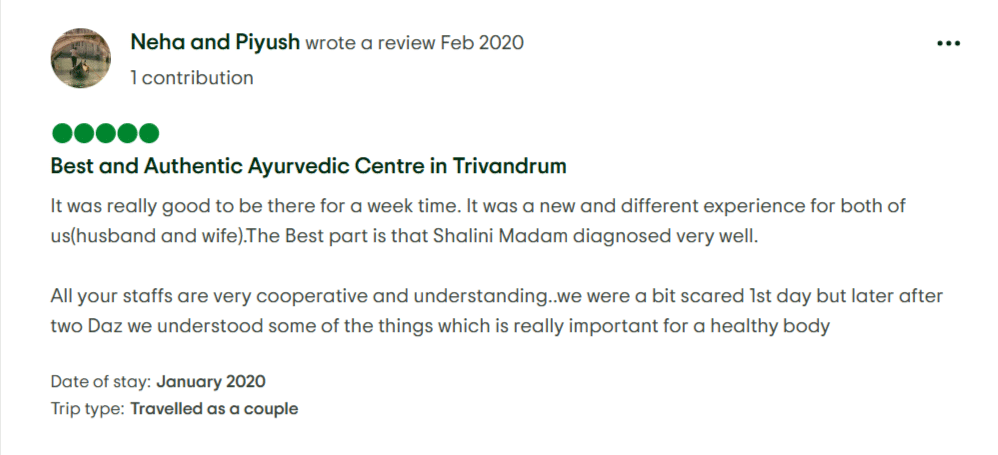
Trip advisor Review

Steroid Free Ayurvedic Treatment for Psoriasis in Trivandrum

Saatwika offers AYurvedic Treatment for Psoriasis in the Trivandrum Centre. Saatwika Ayurveda is a government-licensed Ayurvedic hospital — not a wellness resort, not a spa.

Our skin disease clinic is led by Dr. Salini L.S., MD Ayurveda — 18 years of clinical practice, registered with the Kerala State Medical Council. We treat psoriasis as the systemic condition it is: blood purification first, digestion corrected second, skin rebuilt from within — in the correct clinical sequence.


Psoriasis Treatment at Saatwika Vs Other Hospitals

Typical Approach Elsewhere

Saatwika Ayurveda

✗  External oil applied before internal cleansing

✓  Shodhana (blood purification) first — external only after internal is done

✗  Generic herbal paste without proper diagnosis

✓  Specific formulation per your Kushtha subtype and dosha

✗  No follow-up after you leave

✓  3 scheduled teleconsults post-discharge included

✗  Diet advice is vague or absent

✓  Named foods, named incompatible combinations, seasonal protocol

✗  Stress connection completely ignored

✓  Takradhara targets the psoriasis-stress cycle in one session

✗  Promises a “permanent cure” upfront

✓  Honest goal: long-term remission backed by published PMC clinical data


We Treat All Types of Psoriasis

Psoriasis is not one condition — it is a family of conditions. Your treatment protocol depends on which type you have. Every patient is diagnosed individually.


Plaque Psoriasis (Ekakushtha)

The most common type. Dry, raised red plaques with silvery-white scales on elbows, knees, lower back, and scalp. Ayurvedic correlation: Ekakushtha — Vata-Kapha vitiation affecting skin and deep tissue. Primary treatment: Virechana + Khadirarishta + Lepanam.


Scalp Psoriasis

Thick, scaly plaques on the scalp extending to the forehead. Takradhara (medicated buttermilk poured continuously over the head) is the most effective treatment. Shirobhyanga with Nimbadi oil prescribed for home maintenance between sessions.


Palmoplantar Psoriasis (Vipadika)

Psoriasis on palms and soles. Often misdiagnosed as eczema for years. PMC case study (PMC10307819, 2023): 8-year history improved significantly in just 3 weeks with Ayurvedic oral medication + Jalaukavacharana (leech application).


Psoriatic Arthritis

Psoriasis with associated joint pain and swelling. We address both skin (Kushtha) and joints (Sandhi Vata) simultaneously — combining the skin purification protocol with Kati Vasti or Greeva Vasti for affected joints. Duration: 28–42 days.


Guttate Psoriasis

Small, drop-shaped lesions on trunk and limbs — often triggered by infection or stress. Responds well to Virechana + Raktamokshana + immune-boosting Rasayana (Guduchi, Ashwagandha).


Erythrodermic Psoriasis

Severe type covering large body surface area. Requires full inpatient care with daily physician monitoring. This is a clinical admission — not a wellness programme.

How We Treat Psoriasis — The Clinical Protocols

Every therapy is sequenced in a specific clinical order. Skipping or reordering these steps is why most spa-style treatments fail. Sequence is everything in Ayurvedic skin treatment.

1.  Snehapana — Internal Oleation with Mahatiktaka Ghrita

Before any Panchakarma, the deep tissues must be saturated with medicated ghee. This phase is not optional — it is the clinical foundation. Mahatiktaka Ghrita is administered for 7–14 days in increasing doses, penetrating the Rasa, Rakta, and Mamsa dhatus to loosen embedded toxins. This is the step most spa centres skip entirely. Without it, Virechana will not reach the depth required to address psoriasis at the tissue level.

  • Medicine: Mahatiktaka Ghrita — active phytoconstituents work via a liposomal drug delivery mechanism to reach deep skin layers (established in classical texts and confirmed in PMC8039350)
  • Duration: 7–14 days with daily dose increase until proper oleation (samyak snigdha lakshana) is confirmed by Dr. Salini
  • Concurrent: External Abhyanga with Nimbadi or Khadiradi taila + Svedana (herbal steam) to open skin channels

2.  Virechana — Therapeutic Purgation

The cornerstone of Ayurvedic psoriasis treatment. Virechana eliminates Pitta dosha and Rakta toxins through the lower channels — directly correcting the Rakta Dushti (blood toxicity) that drives psoriasis at the Dhatu level. This is a supervised medical procedure, not a spa cleanse.

  • Clinical evidence: PMC published case study (PMC8039350, 2021) — patient with plaque psoriasis completely cured after 1 year. Zero adverse events. No recurrence even 1 year after treatment was fully stopped
  • Supervision: Salini monitors purgation episodes, hydration, and electrolytes daily
  • Post-Virechana: Samsarjana Krama (graduated re-feeding diet) strictly followed for 3–5 days

3.  Takradhara — Medicated Buttermilk Therapy

Warm medicated buttermilk (Nimbadi Takra or Khadiradi Takra) poured continuously over the forehead and affected areas for 45–60 minutes. This is Saatwika’s most distinctive psoriasis therapy.

  • Why it works: Simultaneously cools Pitta inflammation, calms the nervous system, and treats the skin surface — all in one session. The only Ayurvedic therapy that directly addresses the psoriasis-stress cycle
  • Scientific basis: Medicated buttermilk contains lactic acid — a natural anti-inflammatory — combined with Neem, Khadira, and Triphala for concentrated anti-psoriatic action
  • Best for: Scalp psoriasis, stress-triggered flares, and psoriasis with significant psychological burden

4.  Lepanam — Medicated Herbal Paste Application

Classical herbal pastes applied to affected skin areas — only after internal Shodhana is complete. Not as a standalone or first-line treatment. This sequencing rule is what distinguishes clinical Ayurveda from commercial spa treatment.

  • Nimbadi Lepa: Neem-based; anti-inflammatory, anti-microbial; for active red plaques
  • Khadiradi Lepa: Skin-clearing, anti-fungal; for chronic scaly plaques
  • Haridra + Chandana Lepa: Cooling, anti-itch; for Pitta-dominant types with burning sensation

5.  Raktamokshana — Blood Purification

Classical Ayurvedic bloodletting via Jalaukavacharana (medicinal leech application) for localised, stubborn plaques. Directly removes Rakta Dushti from the affected site at a local level.

  • Palmoplantar psoriasis: PMC case study (PMC10307819, 2023) — significant improvement in 3 weeks for 8-year history patient who had failed all allopathic treatments
  • Used for: Localised, treatment-resistant plaques on hands, feet, and smaller body areas

6.  Internal Herbal Medicines

All formulations sourced exclusively from Dhanwanthari Vaidyasala, Kerala — the most trusted classical Ayurvedic manufacturer in India.

  • Mahatiktaka Ghrita: Deep tissue oleation; primary psoriasis medicine; works at the Dhatu level
  • Khadirarishta: Fermented blood-purifying preparation; reduces scaling, redness, and inflammation
  • Arogyavardhini Vati: Liver and metabolic correction; strengthens Agni to prevent Ama re-accumulation
  • Gandhak Rasayana: Sulphur-based Rasayana with Kushthaghna (skin-correcting) properties; anti-microbial
  • Triphala Churna: Tridosha-balancing; maintains bowel regularity and prevents toxin build-up
  • Post-treatment Rasayana: Guduchi + Ashwagandha — rebuilds immune resilience and prevents recurrence for 3 months after discharge

Your 21-Day Psoriasis Programme — Step by Step

Psoriasis cannot be treated in a weekend. Here is the structured clinical pathway we follow — every step in the correct sequence, supervised by Dr. Salini from day one.


PRE-ARRIVAL
(Free)

Free Teleconsult + Pre-Assessment

• Share your skin photographs, medical history, and list of current medications (including steroids and immunosuppressants).

• Dr. Salini reviews your Kushtha subtype, previous treatment response, and determines suitability for Panchakarma — before you book a flight.

• Personalised treatment plan prepared in advance of your arrival.

DAY 0–1
Arrival

Airport Pickup + Full Clinical Assessment

• Free pickup from Trivandrum International Airport (TRV) — 8 km, approximately 20 minutes.

• Full consultation with Dr. Salini: Nadi Pariksha (pulse diagnosis), skin examination, Kushtha subtype classification, PASI score baseline.

• Prakriti and Vikriti assessment, review of dermatology reports, BP + blood tests if required.

• Personalised treatment plan confirmed in writing at the end of Day 1.

DAYS 2–14
Snehapana

Internal Oleation — The Foundation Phase

• Mahatiktaka Ghrita administered orally in increasing daily doses.

• Dr. Salini confirms proper oleation (samyak snigdha lakshana) before proceeding — this cannot be rushed.

• External Abhyanga with Nimbadi or Khadiradi taila daily + Svedana (herbal steam) to open skin channels.

• Light, easily digestible, Vata-pacifying diet throughout.

• Important: Visible skin improvement may not appear during Snehapana. This is internal preparation — do not judge the treatment by how the skin looks at this stage.

DAYS 15–17
Virechana

Therapeutic Purgation — The Core Purification

• Virechana administered after Snehapana is confirmed complete.

• Physician monitors purgation episodes, hydration, and electrolytes throughout.

• Post-Virechana Samsarjana Krama (graduated re-feeding diet) strictly followed for 3–5 days.

• This phase purifies Rakta and Pitta at the Dhatu level — the root cause of psoriasis in classical Ayurveda.

DAYS 18–21
Primary Skin Treatment

Takradhara + Lepanam + Raktamokshana

• Daily Takradhara (45–60 minutes): medicated buttermilk specific to your Kushtha subtype.

• Lepanam: herbal paste applied to active plaques — now that internal cleansing is complete.

• Jalaukavacharana (leech application) for localised stubborn plaques if clinically indicated.

• Internal medicines twice daily. Daily PASI score review and physician skin assessment.

DISCHARGE
+ Follow-Up

Rasayana Phase + Long-Term Maintenance

• Guduchi + Ashwagandha Rasayana prescribed for 3 months post-discharge.

• Written dietary protocol: specific foods, named incompatible combinations, seasonal adjustments, Nalpaamaram herbal bath routine.

• Teleconsult at 4 weeks — skin response review, medicine adjustment if needed.

• Teleconsult at 3 months — long-term progress and seasonal protocol update.

• Teleconsult at 6 months — maintenance confirmation.

• Flare management plan: exact steps to take if patches reappear — before it escalates.

CLINICAL EVIDENCE 1 — PubMed Central (PMC8039350, 2021):  A patient with plaque psoriasis — erythematous plaques on legs, forearm, and neck; Auspitz sign, and Koebner phenomenon both positive — was treated with multimodal Ayurvedic protocol including Virechana, Mahatiktaka Ghrita, Lepanam, and Rasayana.  RESULT: Patient was completely cured after 1 year. Zero adverse events. No recurrence observed even 1 year after all treatment was fully halted.

CLINICAL EVIDENCE 2 — PubMed Central (PMC10307819, 2023):  A 68-year-old man with 8-year history of palmoplantar psoriasis — previously misdiagnosed as eczema, had failed all allopathic treatments — was treated with Ayurvedic oral medication, Lepanam, and Jalaukavacharana (leech application).  RESULT: Significant improvement in itch, rash, scaling, and erythema within just 3 weeks.

After You Return Home

📞 Teleconsult follow-ups
2 weeks, 6 weeks, 12 weeks — we adjust protocols based on your progress.

📦 Herbal refills
We guide you on sourcing herbs locally or arranging shipment (where legal).

🚨 Flare management plan
You’ll know exactly what to do if pain or symptoms return.

FAQ

Frequently Asked Questions

Every question here came from real patients on Quora, Reddit, and skin disease forums. We answer them honestly.


Q1.  Can Ayurveda permanently cure psoriasis?

We do not use the word “cure” loosely. Here is the honest answer:

Modern dermatology’s official position is that psoriasis has no permanent cure — only management. Ayurveda’s goal is long-term remission — clearing the skin, correcting the immune dysfunction at the root, and preventing flares through sustained lifestyle changes.

Published clinical evidence (PMC8039350, 2021): A patient with plaque psoriasis was completely cured after 1 year of Ayurvedic treatment. No recurrence was observed even 1 year after treatment was fully stopped. Zero adverse events throughout.

Results depend on severity, duration of the condition, and your commitment to the dietary and lifestyle protocol. We set honest expectations at the first consultation — and we put them in writing.

Q2.  How long does Ayurvedic psoriasis treatment take to show results?


  • Mild plaque psoriasis (recent onset): Visible improvement within 3–4 weeks of treatment
  • Moderate to severe chronic psoriasis: Significant improvement after the full 21-day programme; 3–6 months of home maintenance
  • Palmoplantar psoriasis: Significant improvement in 3 weeks documented in PMC case study for 8-year history patient

Important: The first 14 days of Snehapana may not show visible skin improvement — this phase prepares the deep tissues internally. Do not judge the treatment by how the skin looks during Snehapana.

Q3.  I have been on steroids for years. Can I switch to Ayurvedic treatment?

Yes — but carefully. This is one of the most important clinical decisions in psoriasis treatment.

  • Do not stop steroids abruptly on your own. Sudden steroid withdrawal causes severe rebound flares that can be worse than the original condition.
  • Share your complete medication history with Dr. Salini at the pre-consultation. She will design a supervised tapering plan in coordination with your dermatologist.

The transition off steroids must be gradual, monitored, and timed with the Panchakarma protocol — not rushed.

Q4.  Is psoriasis related to stress? Does Ayurveda treat that connection?

Yes — and this is one of Ayurveda’s most important advantages over topical-only treatment.

Modern research confirms the skin-brain axis: stress hormones trigger immune dysregulation that worsens psoriasis. Many patients notice that every major stress event coincides with a new flare.

In Ayurveda, this is described as the Manas (mind) influencing Rakta (blood) through Pitta aggravation. Takradhara is our primary therapy for this — it simultaneously cools skin inflammation and calms the nervous system in the same 45-minute session.

We also prescribe pranayama (Nadi Shodhana, Bhramari) and sleep regulation as part of the discharge protocol — because managing the stress cycle is as important as the Panchakarma itself.

Q5.  What foods should I avoid with psoriasis?

Ayurvedic dietary protocol for psoriasis is specific. These are not vague suggestions:

  • Always avoid: Fish + curd together, fish + milk together (Viruddha Ahara — incompatible combinations that directly trigger Rakta Dushti)
  • Always avoid: Curd (dahi) in any form, especially at night
  • Reduce significantly: Hot and spicy food, excess salt, alcohol, cold drinks with hot meals
  • Never do: Cold water or cold shower immediately after sun exposure or sweating
  • Include daily: Gooseberry (amla), turmeric generously in all cooked food, leafy vegetables
  • Eat: Old grains (minimum 6-month-old rice and wheat), eggplant, shallots, hogweed leaves as curry at least once weekly
  • Drink: Water boiled with Karingali (Acacia catechu) for daily use
  • Bathe with: Water boiled with Nalpaamaram — a combination of fig, ithi, peepal, and banyan bark powder


Q6.  Can Ayurveda treat scalp psoriasis specifically?


  • Shirobhyanga: Oil massage with Nimbadi or Khadiradi taila to the scalp — softens plaques and reduces itch
  • Takradhara: Medicated buttermilk poured continuously over the scalp — highly effective for scaling, inflammation, and the stress component
  • Shirodhara: Medicated oil or decoction poured over the forehead — reduces inflammation and calms the nervous system simultaneously
  • Internal protocol: Same Virechana + Khadirarishta + Mahatiktaka Ghrita base as all psoriasis types

Scalp psoriasis often responds faster than trunk and limb plaques.

Q7.  Is psoriasis contagious?

No. Psoriasis is not contagious in any way. It does not spread through skin contact, shared utensils, clothing, or any other form of contact.

Psoriasis is an autoimmune condition — the immune system attacking the body’s own skin cells, causing them to regenerate every 5–15 days instead of the normal 28-day cycle. No external transmission is possible.

Please share this clearly with your family and workplace. The social isolation that psoriasis patients suffer is largely caused by this misunderstanding — and it compounds the very stress that worsens the condition.

Q8.  Can Ayurveda treat psoriatic arthritis (psoriasis with joint pain)?

Yes. Psoriatic arthritis involves both Kushtha (skin) and Sandhi Vata (joint inflammation). We address both simultaneously:

  • For skin: Virechana + Takradhara + Lepanam + Khadirarishta
  • For joints: Kati Vasti, Greeva Vasti, or Janu Vasti depending on which joints are affected; Basti protocol for Vata correction
  • Combined medicines: Yogaraja Guggulu (joints) + Khadirarishta (skin) + Mahatiktaka Ghrita — a classical dual-action protocol

Treatment duration for psoriatic arthritis: 28–42 days.

Q9.  How do I know Saatwika is a genuine medical facility and not a commercial spa?

Ask any Ayurvedic centre these five questions before you book:

  • Is a named MD Ayurvedic physician on-site? Saatwika: Yes — Dr. Salini L.S., Kerala State Medical Council registration.
  • Is the hospital government-licensed? Saatwika: Yes — licensed Ayurvedic hospital, not a resort.
  • Do they sequence treatment correctly — internal before external? Saatwika: Yes — Lepanam is never applied before Virechana is complete.
  • Do they use classical medicines from licensed manufacturers? Saatwika: Yes — Dhanwanthari Vaidyasala exclusively.
  • Do they provide medical follow-up after discharge? Saatwika: Yes — 3 teleconsults included in every programme.

Q10.  What is the cost of Ayurvedic psoriasis treatment in Trivandrum?

Package cost depends on programme length, accommodation type, and the specific medicines required for your Kushtha subtype. We provide a detailed written quote with zero hidden charges within 24 hours of your enquiry.

Saatwika’s pricing is significantly more affordable than luxury Ayurvedic resorts offering similar protocols — because we are a medical centre focused on clinical outcomes, not amenities.

error: Content is protected !!
Scroll to Top