
Ayurvedic Treatment for Sciatica in Kerala
Authentic Ayurvedic treatment for sciatica in Kerala, with treatment packages customised by our physician after consultation.
- Chief Physician Dr. Salini L S, BAMS
- Sasthamangalam, Trivandrum
- OP 10:00 AM to 4:00 PM
- Online consultation available
Ayurvedic Packages For Sciatica in Kerala
Sitting with Sciatica?? Ever thought of a permanent cure? You have heard it right! Ayurveda can give you relief from this debilitating disease.
Our Ayurvedic treatment for sciatica in Kerala combines Panchakarma, warm medicated oil therapies and herbal medicines in a personalised treatment plan. The aim is to ease the radiating pain, reduce stiffness and restore mobility so that you can return to your daily activities and a better quality of life.

Consult With Our Doctor
Ayurvedic Treatment For Sciatica in Kerala
The main aim of Ayurvedic treatment for Sciatica in Kerala is to bring the vitiated ‘dosha’ back to the state of equilibrium and thereby establish the state of health. In practice, this means calming aggravated Vata, addressing the imbalance at its root cause and relieving the pain and stiffness along the sciatic nerve.
The treatment protocol for any Vata-vitiated disease is snehana (oil application) and swedana (fomentation, including herbal steam).
These therapies are beneficial in relieving the inflammation in the nerve and other underlying causes of Sciatica.
It also helps decrease the muscular spasm in the affected area and strengthens and nourishes the entire spine and supporting tissues.
Ayurvedic Therapies Used in Sciatica Treatment in Kerala
- Abhyanga, Kizhi and Dhara, then Virechana or Vasthi
Treatment procedures like Abhyanga (therapeutic massage with warm medicated oil), Patra Potala swedam(elakizhi), choorna pinda swedam (podi kizhi), swastika shali pinda swedam (njavarakizhi), Dhanyamla dhara etc., done according to the condition of the patient can bring the vitiated doshas to koshta from where it can be cleared by virechana (purgation) or vasthi (enema).
- Kati Vasti (Kati Basti)
Kati Vasti (Kati Basti), a therapy in which medicated oil is held warm over the lower back inside a ring of herbal dough, is commonly used to relax the muscles around the irritated nerve roots and improve circulation.
- Internal medicines
Internal medicines are also integral to pacifying the remaining doshas if any. Classical herbal formulations such as Rasnerandadi Kashayam, Sahacharadi Kashayam and Yogaraja Guggulu are prescribed only after assessment, to suit your condition.
- Agnikarma and Sira Vyadhana
Along with these therapies, Agnikarma, and Sira Vyadana (Venesection) are very effective in treating Sciatica.
Get a personalised sciatica treatment plan
Share your symptoms and MRI or X-ray reports with our Chief Physician, Dr. Salini L S. You receive a written treatment plan and an itemised quote within 24 hours of your enquiry.
What is Sciatica
Sciatica is a neurological condition characterized by excruciating pain, tenderness and numbness along the course of the sciatic nerve, which runs along the posterior part of the leg.
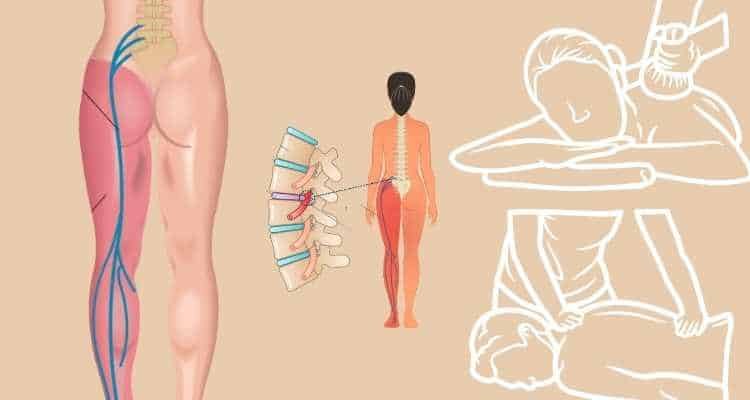
The sciatic nerve is the longest nerve in the body. It runs from the lower back through the buttock and down the back of the thigh and calf to the foot, so the pain of sciatica usually radiates along this path, most often in one leg.
In Ayurveda, sciatica is known as Gridhrasi. The name comes from Gridhra (vulture), because the pain and stiffness change the way the person walks. Classical Ayurvedic texts describe Gridhrasi as a Vata disorder (Vatavyadhi): aggravated Vata, sometimes together with Kapha, settles in the lower back and affects the nerve that supplies the leg.
Symptoms of Sciatica
- Pain in the lower back, buttocks, legs and foot
- Radiating pain from the lower back through the hip, thigh and calf
- The pain progresses through the posterior part of the leg, which deteriorates while walking, sitting and standing.
- Pin and needle pricking sensation
- Stretching or pulling type of pain
- Numbness, pain and weakness in the leg and foot parts.
- Tingling sensation anywhere in the leg.
- Stiffness in the lower back and leg, with restricted movement
- Difficulty in controlling movements of legs
- Symptoms are more likely to manifest on one side of the body.
- In severe cases, burning sensation.
- Weakness and numbness in the lower limb.
- After standing in place or while walking, feeling heaviness in the leg and inability to move the leg.
- Shooting pain in the lower limb makes it difficult to stand up.
- Inability to stand straight.
- Constant pain sensations in the lower limb, even while sleeping.
When to seek urgent care
Seek medical care immediately if leg weakness gets worse quickly, or if you notice numbness around the groin or any loss of bladder or bowel control.
Causes Of Sciatica
Compression of the Sciatic nerve leads to inflammation of the areas surrounding the Sciatic nerve leading to this medical condition.
Dietary Causes
Intake of too much spicy, cold, dry food, Improper eating habits, and Eating incompatible foods and Diets irrespective of the seasonal regimen as per Ayurveda causes Sciatica. Such food habits aggravate Vata, the dosha behind Gridhrasi.
Lifestyle Causes
Damage to the Sciatic nerve is due to strenuous activity such as lifting weights or over-exposure to cold wind. Hereditary factors also pave the way for neurological disorders. Prolonged sitting or standing can pinch the nerve roots, causing pain. Poor posture and excess weight gain can put pressure on the spinal disc causing disc compression.
Medical Causes
Endocrine disorders, such as diabetes mellitus, can damage the peripheral nerves, including the Sciatica nerve. The Sciatic nerve can also be affected if there is a pelvis or hip joint fracture.
How to diagnose Sciatica Pain?
Sciatica is generally diagnosed by physical examination and the history of the symptoms. The most applied diagnostic test is the straight leg raise (SLR) which is considered positive if the pain is felt along the distribution of the sciatic nerve and is reproduced on raising the legs between 30 and 70 degrees. This test is positive in about 90% of people with Sciatica; fortunately or unfortunately, approximately 75% of people with a positive test do not have Sciatica. X-ray Lumbar spine helps assess the vertebra’s position and its associated abnormalities. Imaging tests such as computerized tomography (CT scan) or magnetic resonance imaging (MRI scan) can help diagnose lumbar disc herniation.
Along with these tests, our Ayurvedic assessment looks at your Prakriti (body constitution), digestion, the doshas involved and how long the pain has been present (acute or chronic), before a specific treatment plan is made.
Diseases associated with Sciatica
Sciatic leg pain is often associated with several conditions that pinch or irritate the sciatic nerve.
Piriformis syndrome
Spasms in the piriformis muscle can cause compression of the sciatic nerve.
Herniated disc
The intervertebral disc may bulge or herniate and cause nerve compression.
Lumbar Spinal Stenosis
Narrowing the spinal canal in the lower back may cause increased spinal cord and nerve pressure.
Degenerative disc disease
The intervertebral disc may dry out and shrink as a part of the natural aging process. This causes pressure on the nerve.
Spondylolisthesis
A condition in which one vertebrae slips forward over another, resulting in the nerves’ compression.
Other causes of leg pain
Leg pain can also be due to hip or sacroiliac joint diseases. This is typically called referred pain and is quite common. Other conditions that worsen back pain include obesity, lack of exercise, pregnancy, wearing high heels, trauma or sleeping on a mattress that is too soft.
Yoga and Yogasana
Yoga renders mental and physical stability. It helps decrease pain perception by healing the emotional aspect of pain.
Practicing Pranayama (Anulom viloma or alternate nostril breathing) can help balance Vata.
Caution: Before trying any of these postures, consult a yoga teacher or ayurvedic physician to determine the best postures for your condition.
Among the Yoga Asanas, start with these simple postures
- Padahastasana
- Pavanamukthasana
- Salabhasana
- Bhujangasana
- To keep the spine aligned, practice Veerasana.
Regimen during treatments
Dos and Don’ts during treatment
Do’s
- Intake of Madhura (sweet), Amla (sour), Lavana (salt) and Snigdha (unctuous) foods, Garlic, Ginger, hing, Black pepper etc., is advisable
- Eat warm, freshly cooked meals that pacify Vata
- Regular Exercise is mandatory
- Maintaining optimum weight;
- Avoiding excessive repetitive motions
- Healthy diet and lifestyle
- Protecting an injured joint from further damage
Don’ts
- Long fasting and excess of heavy food
- Awakening at night (Ratri Jagran),
- Vega Dharana (suppression of natural urges),
- Stress,
- Prolonged standing,
- Overexertion and injury to joints
Home remedies to reduce sciatica pain
- Lie straight on your bed with a pillow under the knees while sleeping,
- Low-impact exercises such as light walking and jogging.
- Exercises are to be performed under Medical supervision
- Alternate hot and cold compresses might be quite helpful in relieving pain.
- Milk boiled with garlic
- Drumstick leaf paste
- Dashmool tea
- Firm mattress
- Manage everyday stress
- Good lumbar spine support
- Heating pads
- Regular massages
Please take guidance from our doctor before using any of these remedies, especially if the pain is severe.
Lifestyle modification to prevent Sciatica
Living a healthy lifestyle with low-impact exercise, getting plenty of rest, enough sleep, and a healthy diet and weight are simple ways to prevent its recurrence.
Among lifestyle changes, diet plays an important role.
A large proportion of the diet must contain fibre, which facilitates proper movement of the bowels, thereby enhancing the digestive capacity and reducing low back compression.
Green leafy vegetables and fruits such as bananas and apples should form an essential part of your diet, providing vitamins that nourish the nerve roots.
Gentle stretching, good posture while sitting and bending, and short breaks from long periods of sitting, also protect the lower back.
Quitting smoking is another important change to be made to prevent not only Sciatica but also other deadly diseases.
Include in your diet
Whole grains, Flax seeds, spinach, carrot, cabbage, cucumber, black beans, ladies’ finger, tomatoes, banana, orange, lemon, honey, raisins, fatless cottage cheese, coconut oil, and fish oil, should be included in the diet.
Drinking plenty of water is recommended.
Avoid
Avoid heavy meals, as they take a long time to digest. This may exert undue pressure on the lower back region.
It is always advised to avoid foods rich in trans fat, gluten, excess salt and sugars.
Ayurvedic treatment in Kerala can help neurological conditions like Sciatica. The external therapies, including Agnikarma and Venesection, are very effective for immediate pain relief. Following proper food regimes, exercise, and healthy weight management helps prevent the disease.
Visiting Saatwika: How to Reach, Timings, Stay and Cost
Saatwika Ayurveda is a government-licensed Ayurvedic hospital in Sasthamangalam, Trivandrum, where your sciatica treatment is planned and supervised by Dr. Salini L S. Here is what to expect when you come for treatment.
- Address: SEKT 41, Kurups Lane, Sasthamangalam, Trivandrum, Kerala 695010
- About 7 km (20 to 30 minutes) from Trivandrum International Airport
- About 3 km from Trivandrum Central railway station
- Free airport pick-up and drop-off on request for outstation and international patients
- Call +91 98462 22059 before you travel
- Outpatient (OP) consultation: 10:00 AM to 4:00 PM with the Chief Physician, by prior appointment
- Inpatient (IP) care: 8 inpatient rooms for residential treatment courses, so book early
- Daily outpatient treatment is possible if you stay nearby; we can suggest hotels close to the centre
- Typical treatment programmes run 7 to 21 days, as decided by the doctor
- An online consultation is available before you travel
- No ready-made packages: cost depends on the therapies, medicines, number of days and whether you stay as an inpatient
- A written treatment plan and itemised quote within 24 hours of your enquiry
- Medicines are charged separately from therapies
- Payment by bank transfer, credit or debit card, or UPI, with a detailed invoice
- Private inpatient rooms with attached bathroom
- Well-equipped therapy rooms for Panchakarma and Kerala therapies
- In-house Ayurvedic pharmacy
- Vegetarian, dosha-balanced meals from a dietary kitchen, with gluten-free options
- Dining area, yoga space and free wifi
- Treatment planned and reviewed by Dr. Salini L S, with teleconsultations at 2, 6 and 12 weeks after discharge and herbal medicines for 30 to 60 days
- Consultation in English, Malayalam and Hindi
Saatwika is a pure treatment centre. Please plan your visit knowing that we:
- Are not a luxury resort or spa offering relaxation holidays
- Are not a beach-side or backwater retreat
- Do not arrange sightseeing tours or holiday activities
- Do not sell ready-made packages before the doctor has assessed you
- Do not promise guaranteed cures or fixed results
Consult With Our Doctor For Sciatica Treatment
If you are planning to take an ayurvedic treatment in Kerala for Sciatica pain, then book an appointment at our Ayurvedic treatment in Trivandrum
Consult With Our Doctor
Make an Enquiry
This page is for general information. It does not replace a medical diagnosis or emergency care.