
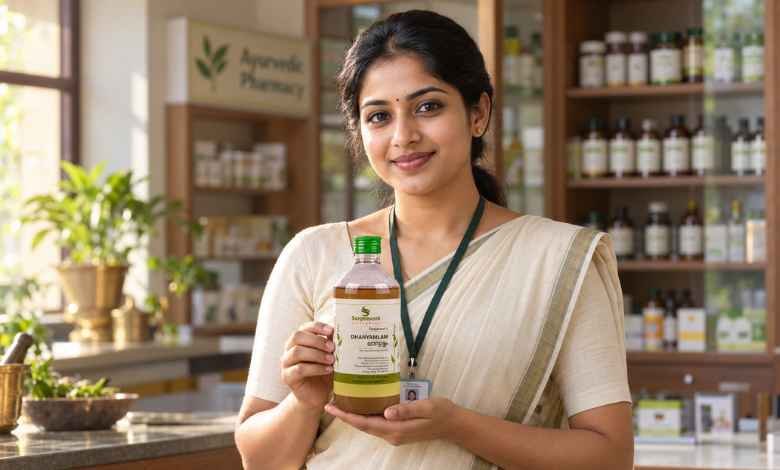
Dhanyamlam is a classical Ayurvedic fermented liquid preparation made by naturally fermenting cereals or grains with sour and aromatic ingredients.
Dhanyamlam: the name comes from two words: Dhanya, meaning grain, and Amla, meaning sour or fermented.
Unlike the Arishtas and Asavas we’ve covered so far, Dhanyamlam isn’t really meant to be swallowed. It’s used mainly as an external therapy, especially in Panchakarma treatments aimed at pain and inflammation.
Its formula is described in the classical text Sahasrayogam.
To make it, rice or other grains are fermented along with a selection of aromatic spices and sour ingredients like lemon.
The result is a warm, sour, slightly heavy liquid that Ayurveda believes can “pierce through” stagnant Kapha sitting deep in the tissues. That’s essentially why it’s poured over swollen, stiff or inflamed areas of the body.
Ingredients
Dhanyamlam is made by fermenting grains together with aromatic herbs and sour ingredients. The exact combination varies from one manufacturer or tradition to another, but it generally includes:
- Dhanya (cereals or grains, most often rice), which forms the fermentation base
- A set of aromatic spices, following the Sahasrayogam formula
- Nimbu (lemon) or other sour ingredients
- Purified water
- Organic acids such as lactic and acetic acid, which develop naturally during fermentation
Because the herb combinations differ quite a bit between brands, it’s worth checking your specific product label or classical reference if you need the exact list.
Ayurvedic properties of Dhanyamlam
Dhanyamlam’s character comes from its sour, penetrating quality and its ability to clear Kapha from the tissues.
- Taste: Amla (sour)
- Potency: Traditionally described as cooling, though its fermented, unctuous and heavy nature gives it an overall calming effect on Vata
- Post-digestive effect: Madhura (sweet)
- Action over doshas: Mainly pacifies Vata because of its fermented, heavy, sour character; also helps balance Pitta in moderate amounts, and clears deranged Kapha when applied externally
- Key actions: Penetrates into the tissues to clear Kapha, eases inflammation and swelling, and supports digestive balance in the small amounts used internally
Use of Dhanyamlam in Ayurvedic Treatment
Dhanyamlam shows up mostly as an external therapy in Panchakarma practice, though some regional traditions also use it internally for digestion. You’ll find it used for:
- Acute and chronic inflammation, swelling, and joint pain
- Dhanyamladhara, where the warmed liquid is poured continuously over the body
- Dhanyamla Kizhi, a fomentation technique using the liquid
- As the medium for applying medicated herbal powders (Lepana) in inflammatory conditions
- Supporting various Panchakarma procedures
- Mild digestive imbalances, including occasional diarrhoea, when used internally in traditional regional practice
How does Dhanyamlam work
Externally, Dhanyamlam’s sour, penetrating and slightly heating nature is believed to cut through congested, deranged Kapha sitting in the tissues.
This is thought to improve circulation to the area, clear stagnation, and calm down inflammation, swelling, and stiffness.
In therapies like Dhanyamladhara and Dhanyamla Kizhi, the warmed liquid is poured or applied repeatedly over the body, producing a gentle sweating effect that’s specifically used for inflamed joints and muscles.
When taken internally, in the traditional practices that still do this, the lactic and acetic acid formed during fermentation are thought to support a healthy gut environment and beneficial gut flora.
That’s part of why some folk traditions use it for mild, ongoing digestive complaints, including in children with mild chronic diarrhoea.
Conditions Dhanyamlam helps to treat
- Acute and chronic inflammation
- Joint swelling and pain
- Muscular stiffness and discomfort
- Conditions treated with Lepana-based Panchakarma therapy
- Mild digestive imbalances, including mild diarrhoea, where used internally
Benefits of Dhanyamlam
- Helps reduce inflammation, swelling and the pain that comes with them
- Supports circulation and helps clear stagnant Kapha from the tissues
- Works well as a medium for applying herbal powders in inflammatory conditions
- Supports several Panchakarma procedures, including Dhanyamladhara and Dhanyamla Kizhi
- May support healthy digestion and gut flora when used internally in small amounts, per traditional practice
Direction for usage
How Dhanyamlam is used depends heavily on whether it’s for external or internal application, and the two shouldn’t be confused.
For external use, which is by far the most common, a trained Ayurvedic therapist will warm the liquid and check its temperature before using it for Dhanyamladhara, Dhanyamla Kizhi, or as a Lepana medium. A Dhanyamladhara session typically runs about 45 minutes and should only be carried out by someone trained in the procedure.
For internal use, found mainly in traditional or regional practice, typical adult doses described in some sources are around 10 to 20 ml of the liquid, or 1 to 2 teaspoons of Dhanyamla Churnam, the powder form, simmered in water, taken twice daily. This should only happen under the guidance of a qualified Ayurvedic physician, since concentrations and formulations vary quite a bit.
Most commercially available Dhanyamlam products say clearly that they’re for external use only, so it’s worth checking your specific product before considering internal use.
Interaction with other medicine
Dhanyamlam is generally used on its own as an external therapy medium, or alongside other Panchakarma procedures as directed by a physician. Internal use, where it happens, is typically guided by a physician rather than self-directed.
Since most use is external, systemic drug interactions are unlikely. Still, anyone undergoing Dhanyamladhara or Dhanyamla Kizhi should mention any skin conditions, open wounds, or sensitivities to their therapist beforehand. For internal use, there are no formal interaction studies on Dhanyamlam, but a few precautions are worth knowing:
- Anti-diabetic medicines and insulin: some sweetened versions of Dhanyamlam contain jaggery, which can affect blood sugar. Diabetics should check the formulation and monitor their blood glucose if taking it internally.
- Medicines for peptic ulcer or acid reflux: the sour taste of Dhanyamlam can aggravate ulcers or acidity when taken internally, so people with these conditions should be cautious.
- Heart, kidney or liver disease: anyone with chronic conditions affecting these organs should check with a qualified Ayurvedic physician before any internal use.
Side effects
Used externally and correctly by a trained therapist, Dhanyamlam is generally safe and well tolerated, and that’s actually one of its main appeals as a therapy. Internal use, where practiced, may occasionally cause mild acidity or stomach discomfort, especially in people with sensitive digestion or existing acidity. If any skin irritation shows up after external use, or digestive discomfort after internal use, it’s best to stop and check with a physician.
Who should avoid it
For external use, people with open wounds, broken skin, active skin infections, or known sensitivity to fermented preparations should avoid applying it to the affected area unless a therapist specifically advises otherwise.
For internal use, people with active peptic ulcer disease should steer clear, since the sour taste can aggravate sores. Diabetics should only use sweetened versions under medical advice, and anyone with chronic heart, kidney or liver disease should have a qualified Ayurvedic physician involved before trying it. Pregnant or breastfeeding women should also check with a physician first, whether considering external or internal use.
How to keep this medicine
Store it in a cool, dry place away from direct sunlight. Keep the bottle tightly closed after each use, and use a clean, dry container or applicator to avoid contamination. Keep it well out of reach of children, and always check the product label, since most commercially available Dhanyamlam is meant strictly for external use.
FAQ
- What is Dhanyamlam used for?
Dhanyamlam is mainly used externally in Ayurvedic Panchakarma therapy, especially for inflammation, swelling and joint pain, through procedures like Dhanyamladhara and Dhanyamla Kizhi. Some traditional practices also use small internal doses for mild digestive imbalances. - Is Dhanyamlam for external or internal use?
Most commercially available Dhanyamlam is meant for external use only, particularly in therapies like Dhanyamladhara and Dhanyamla Kizhi. Internal use does exist in some traditional and regional practices, but it should only happen under a qualified Ayurvedic physician’s guidance, using a product specifically intended for that purpose. - What is Dhanyamladhara?
Dhanyamladhara is a Panchakarma procedure where warmed Dhanyamlam is poured continuously over the body in a steady stream, carried out by trained therapists. It’s used mainly for chronic inflammation, joint pain and swelling, and a session usually takes about 45 minutes. - Does Dhanyamlam help with joint pain and swelling?
Yes, this is one of its main traditional uses. The sour, penetrating quality of Dhanyamlam is believed to clear deranged Kapha from the tissues, helping ease inflammation, swelling and the pain that comes with them, mainly through Dhanyamladhara and Dhanyamla Kizhi. - What is Dhanyamla Kizhi?
Dhanyamla Kizhi is a fomentation technique that uses Dhanyamlam, often along with herbal boluses, applied to the body to relieve inflammation, stiffness and pain. It’s commonly used for chronic joint and muscle conditions. - Can Dhanyamlam be taken internally for digestion?
In some traditional and regional practices, yes, usually at doses of around 10 to 20 ml of liquid or 1 to 2 teaspoons of the powder form, taken with warm water. That said, this should only be done under a qualified Ayurvedic physician’s guidance, since most commercial products are meant for external use only. - Is Dhanyamlam safe for everyday use?
Used externally under professional guidance, it’s generally considered safe. It isn’t really meant for unsupervised everyday internal use, so anyone thinking about taking it internally should talk to an Ayurvedic physician first. - Who should avoid Dhanyamlam?
People with open wounds or skin infections should avoid applying it to the affected area unless a therapist says otherwise. For internal use, people with peptic ulcers, uncontrolled diabetes, or chronic heart, kidney or liver disease should avoid it unless a physician is involved.

