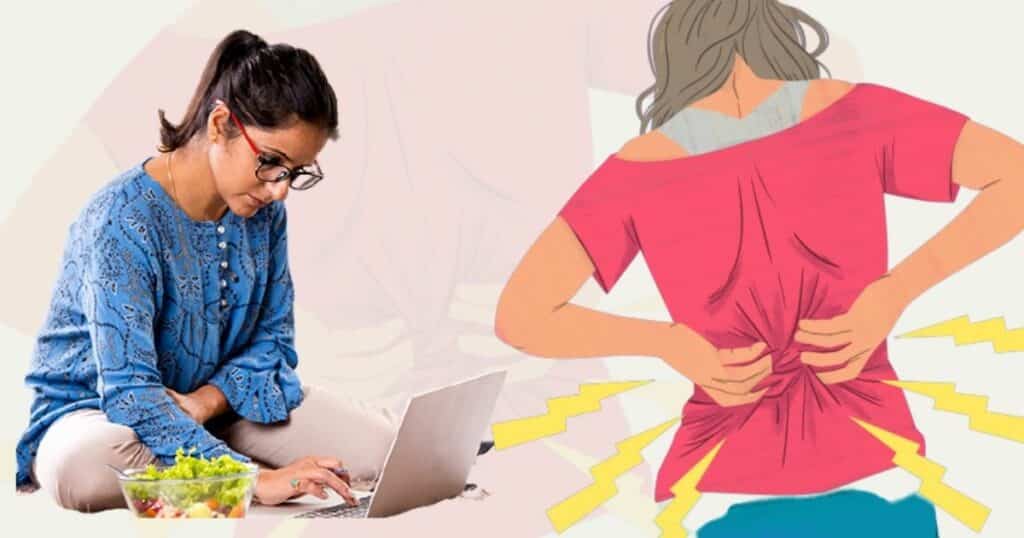
Back pain does not announce itself politely. It arrives — in the middle of the night, after a long day at the desk, or the moment you bend to pick something off the floor — and it refuses to leave.
If you have been managing it with painkillers, physiotherapy, or steroid injections and still waking up stiff and uncomfortable every morning, you are not alone. Millions of people in India and worldwide are in the same cycle.
Ayurveda looks at back pain differently. Not as a structural fault to be managed, but as a systemic imbalance with a root cause — one that can be identified, treated, and corrected.
This guide covers everything: what Ayurveda actually says about back pain, how it diagnoses your specific condition, which therapies and medicines are used, and what you can honestly expect from treatment.
What Ayurveda Says About Back Pain — And Why the Root Cause Matters
TLDR: Ayurveda sees back pain as primarily a Vata disorder rooted in the lumbar region. Treatment must address the root cause — not just the site of pain.
Most modern treatments for back pain target the site of pain. Ayurveda targets the cause of pain.
In Ayurvedic medicine, back pain is called Kati Shoola — Kati meaning the lumbar region and Shoola meaning acute or stabbing pain. It falls under the domain of Vata dosha, the biological force that governs all movement, nerve conduction, and joint function in the body.
When Vata becomes aggravated — through prolonged sitting, irregular meals, stress, cold and dry environments, or disturbed sleep — it disrupts the structures it governs. In the spine, this manifests as stiffness, nerve pain, radiating discomfort, or progressive disc degeneration.
But Vata rarely works alone in chronic back pain. In most long-standing cases, Ama is also present. Ama is the Ayurvedic term for undigested metabolic residue — a sticky, toxic accumulation produced when digestion is weak. Ama blocks the body’s channels (Srotas), traps Vata in the tissue, and creates the kind of deep, persistent pain that does not fully respond to anti-inflammatory treatment.
This is the clinical reality that shapes Ayurvedic treatment for back pain at Saatwika: treatment is always structured in two phases.
- Phase 1 — Shodhana (Purification): Remove Ama, open blocked channels, and clear the root cause of the imbalance.
- Phase 2 — Shamana (Pacification): Pacify the remaining Vata aggravation, nourish damaged tissues, and rebuild strength.
This is also why patients who receive only oil massage — without internal medicines and Panchakarma — often feel better temporarily, then relapse. The Ama has not been addressed. The root has not been touched.
Types of Back Pain Treated with Ayurveda
TLDR: Ayurveda does not treat ‘back pain’ as one condition. The approach changes significantly based on the exact diagnosis, nerve involvement, and the patient’s constitution. Here are the conditions most commonly treated at Saatwika Ayurveda, Trivandrum.
Sciatica (Gridhrasi)
Sciatica is one of the most precisely described conditions in classical Ayurveda. It is named Gridhrasi — after the gridhra (vulture) — because the patient walks bent and guarded, favouring one leg the way a vulture moves.
Symptoms include shooting pain from the lower back into the buttock, thigh, calf, and sometimes the foot. The pain follows the path of the sciatic nerve — typically compressed at the L4-L5 or L5-S1 disc level.
Ayurvedic treatment targets the nerve sheaths (Majja Dhatu) and the colon. Basti (medicated enema) is considered the definitive treatment for Gridhrasi in classical texts, because it pacifies Vata at its source.
Full sciatica treatment protocol at Saatwika Kerala →
Disc Bulge and Disc Herniation
A disc bulge occurs when the inner gel of an intervertebral disc pushes against its outer ring. When that ring ruptures and the gel presses on nearby nerve roots — that is a herniation.
In Ayurvedic terms, disc degeneration represents Asthi and Majja Kshaya — a depletion of the bone and nerve-tissue elements — compounded by Vata aggravation. The treatment goal is not mechanical manipulation. It is to reduce nerve-level inflammation, nourish the depleted tissue layers, and restore the circulation that keeps disc tissue healthy.
Contrary to a common misconception, Ayurvedic treatment does not attempt to push the disc back mechanically. What Ayurveda does is reduce the inflammatory pressure on the nerve and support the body’s own capacity for disc resorption over time.
Ayurvedic treatment for disc bulge — detailed guide →
L4-L5 Disc Bulge
The L4-L5 level is the most commonly affected spinal segment in adults — it bears the greatest mechanical load during sitting, bending, and lifting. Symptoms include lower back pain, hip and groin radiation, and sometimes weakness or numbness in the leg.
A specific protocol has been developed at Saatwika — combining Kati Basti over the lumbar spine, Rasnerandadi or Dhanwantharam Kashayam internally, and structured Basti therapy for deep Vata pacification.
Detailed L4-L5 disc bulge treatment at Saatwika →
Ankylosing Spondylitis
Ankylosing Spondylitis (AS) is a chronic inflammatory condition in which the vertebrae of the spine gradually fuse. Morning stiffness lasting more than one hour, sacroiliac joint pain, and progressive restriction of spinal movement are the hallmarks.
In Ayurveda, AS corresponds to an Ama-dominant, autoimmune-pattern Asthi Shoola. Treatment requires long-term management combining anti-inflammatory herbs, immune-modulating Rasayanas, and Panchakarma therapies designed to slow the progression and preserve mobility.
Ayurvedic treatment for ankylosing spondylitis in Kerala →
Fibromyalgia
Fibromyalgia presents as widespread musculoskeletal pain, fatigue, and tenderness at multiple body points. Modern medicine has no clear structural explanation for it, and treatment is largely symptomatic.
Ayurveda maps fibromyalgia to a Tridosha imbalance with predominant Vata involvement and significant Ama saturation in the Mamsa Dhatu (muscle tissue). Treatment is highly individualised.
Ayurvedic treatment for fibromyalgia in Kerala →
Postural and IT-Related Back Pain
This is the fastest-growing category of back pain — and the youngest. Software engineers, remote workers, and content creators who sit 8+ hours daily develop chronic lower back tightness, intermittent spasms, and a nagging ache that no amount of stretching fully resolves.
The Ayurvedic profile is Vyana Vata aggravation combined with Ama from irregular meals and disrupted sleep. The good news: this pattern responds faster than almost any other back pain type when treated early.
Ayurvedic treatment for IT-related back pain — full protocol →
How Ayurveda Diagnoses Your Back Pain
TLDR: Your MRI report is a starting point — not the full picture. Ayurvedic diagnosis goes beyond imaging to assess the patient’s constitution, digestive strength, and tissue quality.
At Saatwika, the diagnostic process for back pain involves five layers of assessment:
- Prakriti Assessment (Body Constitution) — Your baseline constitution determines your disease tendency and shapes every treatment decision.
- Nadi Pariksha (Pulse Diagnosis) — The physician reads the pulse to assess current dosha imbalance, organ vitality, and the depth of Ama accumulation.
- Review of Modern Investigations — MRI, X-ray, nerve conduction studies, and blood reports are reviewed and integrated into the Ayurvedic assessment.
- Agni Assessment (Digestive Strength) — Poor digestion is one of the primary drivers of Ama accumulation — and Ama is what makes chronic back pain chronic.
- Bala Assessment (Patient Vitality) — How strong is the patient right now? Bala determines what intensity of Panchakarma is appropriate.
|
Note: A disc bulge on an MRI is not automatically a surgical emergency. Many patients with significant findings on imaging have minimal symptoms — and many patients with significant symptoms have unremarkable imaging. Ayurvedic treatment assesses the whole person, not the scan. |
Ayurvedic External Therapies for Back Pain
TLDR: External therapies work through heat, medicated oils, and herbal compounds to relax muscles, reduce inflammation, and nourish tissues at the structural level.
Elakizhi (Patra Pottali Sweda)
Elakizhi is a fomentation therapy using cloth boluses packed with fresh medicinal leaves — Eranda (castor), Nirgundi, Arka, tamarind, and lemon — dipped in warm medicated oil and applied rhythmically over the back in a precise sequence.
The combination of moist heat and herbal actives penetrates deep into muscle, fascia, and joint tissue. It reduces Vata and Kapha, relieves stiffness, and improves local circulation. Elakizhi is one of the primary therapies for disc-related back pain and sciatica. A standard course runs 7 to 14 days, typically twice daily.
Complete guide to Elakizhi treatment →
Podikizhi (Choorna Pinda Sweda)
Podikizhi uses boluses filled with dry herbal powders applied as dry heat fomentation after oil application. It generates a penetrating dry heat particularly effective for cold, stiff, heavy-type back pain with a Kapha component — morning stiffness that takes an hour to ease, symptoms worsened by damp weather.
Podikizhi treatment — how it works and when it is used →
Kati Basti
Kati Basti is the signature localised treatment for lumbar back pain. A ring of black gram dough is built around the lower back, creating a sealed reservoir. Warm medicated oil — typically Dhanwantharam Thailam or Karpasasthyadi Thailam — is held in this reservoir for 30 to 45 minutes.
The oil directly bathes the lumbar vertebrae, the disc spaces, the facet joints, and the surrounding nerve roots. It is the only therapy that delivers concentrated medicated oil directly to the spinal structures — and is considered essential for disc bulge, disc herniation, and lumbar spondylosis cases.
Lepanam (Herbal Paste Application)
Lepanam is the application of a freshly prepared herbal paste over the affected region of the back. Made from herbs such as Shunti (dry ginger), Erandamoolam, or Dashamoola, it draws out localised inflammation and Ama from the surface tissue layer. Used during acute inflammatory flare-ups.
Lepanam in Ayurveda — procedure and uses →
Avagaham (Medicated Hip Bath)
Avagaham is a medicated sitz bath in which the patient sits immersed in warm herbal decoction — typically Dashamoola or Nirgundi-based preparations — up to the waist. Particularly effective for sacroiliac pain, ankylosing spondylitis, and lower lumbar conditions.
Avagaham treatment — complete guide →
Ayurvedic Internal Medicines for Back Pain
TLDR: External therapies address the tissue layer. Internal medicines address the systemic root. Skipping internal medicines is the single most common reason back pain returns after treatment.
Kashayams (Herbal Decoctions)
Kashayams are concentrated herbal decoctions — the most bioavailable form of Ayurvedic internal medicine for musculoskeletal and neurological conditions. Taken twice daily on an empty stomach, before meals.
|
Kashayam |
Indicated For |
Key Action |
|
General Vata disorders, musculoskeletal & nerve conditions |
Nourishes nerve tissue; standard base medicine for most back pain protocols |
|
|
Sciatica (Gridhrasi), lumbar nerve pain |
Classically indicated for sciatic nerve pain in Sahasrayogam; anti-inflammatory, Vata-pacifying |
|
|
Vata-dominant nerve and muscle pain |
Nerve-soothing; strengthens Majja Dhatu (nerve tissue layer) |
|
|
Vata disorders, musculoskeletal stiffness |
Broad Vata-pacifying; used for back stiffness and spondylosis |
|
|
Back pain with inflammatory component |
Anti-inflammatory; addresses both musculoskeletal and systemic inflammation |
|
|
Arthritis, disc degeneration, spondylitis |
Guggulu-based; strong anti-inflammatory; effective in disc degeneration |
|
Note: These medicines are not interchangeable. The correct formulation is always selected based on Prakriti, dosha assessment, and the nature of the condition. Always take under the guidance of a qualified Ayurvedic physician. |
Medicated Oils (Thailams) for External Application
Medicated oils are used for Abhyanga (oil massage), Kati Basti, and all other oil-based procedures. The oil chosen determines the depth and therapeutic nature of the treatment.
|
Thailam |
Best Used For |
Key Properties |
|
Neuromuscular & musculoskeletal disorders |
Classical nerve oil; used in sciatica, disc-related conditions, Panchakarma |
|
|
Sciatic nerve pain, Vata disorders |
Nerve-soothing and deep muscle-relaxing |
|
|
General back pain, musculoskeletal weakness |
All-purpose Vata oil; nourishes and strengthens spinal musculature |
|
|
Severe Vata depletion, chronic degeneration |
Richer, heavier formulation; for long-standing cases with tissue depletion |
|
|
Neuromuscular conditions, nerve-root compression |
Deeply nourishes the nerve tissue layer; used in sciatica with motor weakness |
|
|
Stiff, cold Vata-Kapha back pain |
Strongly warming; breaks deep stiffness and improves mobility |
|
|
Post-treatment muscle strengthening |
Muscle-building; used in the rehabilitation phase after intensive treatment |
|
|
Acute pain, cold and stiff back, spasm |
Warming and penetrating; useful for immediate symptomatic relief |
|
|
Inflammatory, hot, burning-type back pain |
Cooling and Pitta-pacifying; for burning or hot sensations in the back |
|
|
Trauma-related back pain, muscle strains |
Wound-healing and anti-inflammatory; for back pain following injury or accident |
Panchakarma for Back Pain: The Deepest Level of Treatment
TLDR: Panchakarma clears Ama and resets the Vata imbalance at a tissue level — delivering results that surface-level massage cannot achieve. For chronic back pain, Panchakarma is not optional.
A Panchakarma programme for back pain at Saatwika Trivandrum typically follows this sequence:
- Step 1 — Purvakarma (Preparation): Snehana (internal ghee administration) for 3 to 7 days, followed by Abhyanga (full-body oil massage) and Swedana (medicated steam). This loosens Ama from tissues and mobilises it toward the gut.
- Step 2 — Pradhana Karma (Main Procedures): Kati Basti daily; Elakizhi or Podikizhi based on dosha pattern; and Basti (medicated enema) — the most powerful Vata-pacifying intervention in Ayurveda.
- Step 3 — Paschat Karma (Recovery and Rebuilding): Rasayana medicines, dietary guidance, and lifestyle protocols to consolidate the gains made and prevent recurrence.
For conditions like sciatica and disc bulge, Basti is not supplementary — it is the primary treatment. Patients who receive only external therapies without Basti are receiving an incomplete Panchakarma protocol.
A residential programme runs a minimum of 14 days for mild to moderate conditions, and 21 to 28 days for disc-related or chronic spondylitic conditions. Day programmes are available for residents in Trivandrum.
Ayurvedic Diet and Lifestyle for Back Pain Relief
TLDR: Diet and daily habits are part of the treatment — not optional additions. A patient who ignores dietary guidance at home is undermining half the treatment.
What to Reduce or Avoid
- Cold foods and drinks — cold suppresses digestive fire and directly aggravates Vata
- Dry, crunchy, rough foods — popcorn, crackers, raw salads in excess
- Irregular meal timing — eating at different times each day is one of the fastest Vata aggravators
- Fasting or skipping meals — contrary to popular wellness advice, this is harmful for Vata-type back pain
- Carbonated beverages — aggravate Vata through gas and distension
What to Include
- Warm, freshly cooked meals with adequate ghee or sesame oil
- Sesame seeds — the highest Vata-pacifying food in classical texts; add to rice, soups, and bread
- Ghee — 1 to 2 teaspoons daily; lubricates joints and nourishes nerve tissue
- Warm milk with Ashwagandha or Shatavari powder — supports tissue rebuilding
- Ginger tea — improves Agni (digestive fire), reduces Ama, and supports circulation
Daily Routine (Dinacharya) Adjustments
- Self-Abhyanga: 10 minutes of warm sesame oil massage to the lower back before bathing — daily, not occasionally
- Sleep surface: Firm mattress; avoid overly soft mattresses or sleeping on the stomach
- Movement: 20 to 30 minutes of gentle walking daily — stagnation is one of the worst things for Vata-type back pain
- Posture breaks: Stand and walk for 2 to 3 minutes every 45 minutes if you work at a desk
Common Myths About Ayurvedic Back Pain Treatment
TLDR: Several widespread beliefs about Ayurvedic back pain treatment are either inaccurate or dangerously incomplete. Here is the factual record.
Myth 1: “Oil massage is the main Ayurvedic treatment for back pain.”
Reality: Massage (Abhyanga) is a preparatory therapy — not the main treatment. The core therapies are Basti, specific Kashayams, and targeted Kizhi procedures. Patients who receive only massage are receiving perhaps 20% of a complete Ayurvedic back pain protocol.
Myth 2: “Ayurveda is slow. It takes months to feel anything.”
Reality: Acute back pain (under 3 months duration) often shows significant improvement within 7 to 14 days of correct treatment. Moderate sciatica (under 6 months) frequently improves substantially within 21 days. Incomplete treatment is slow — Ayurveda is not.
Is Ayurveda good for back pain? A detailed answer →
Myth 3: “My MRI determines whether Ayurveda can help me.”
Reality: The MRI shows structural changes. Ayurveda treats the person with those structural changes — their constitution, their current vitality, their digestive health, the nature of their Vata imbalance. Many patients with alarming MRI findings respond excellently to Ayurvedic treatment.
Myth 4: “One medicine fixes all back pain.”
Reality: Rasnerandadi Kashayam is the classical medicine for sciatica. Guggulutiktakam Kashayam is used for disc degeneration and spondylitis. Kottamchukkadi Thailam is the oil for stiff, cold-type pain; Pinda Thailam is for hot, inflamed-type pain. These are not interchangeable.
Myth 5: “Ayurveda and modern medicine cannot coexist.”
Reality: At Saatwika, MRI reports, blood tests, and modern investigations are reviewed and integrated into the treatment plan. Patients on essential medications are not asked to discontinue them without careful evaluation. Ayurveda and modern medicine are complementary — not adversarial.
What to Realistically Expect: Timeline and Results
TLDR: Results depend on how long the condition has been present, the patient’s overall vitality, and compliance with the complete treatment protocol including diet and medicines at home.
|
Condition |
Duration Before Treatment |
Expected Response Timeline |
|
Acute muscle spasm / postural pain |
Less than 3 months |
Significant relief in 7–14 days |
|
Mild to moderate sciatica |
Less than 6 months |
Substantial improvement in 14–21 days |
|
Disc bulge (L4-L5 or L5-S1) |
Less than 1 year |
Meaningful relief in 21–28 days; maintenance medicines for 3–6 months |
|
Disc herniation with nerve-root compression |
1 to 2 years |
28–42 days intensive; 3–6 month follow-up protocol |
|
Ankylosing Spondylitis |
Chronic, long-standing |
Progression slowed; mobility preserved; ongoing seasonal treatment |
|
Fibromyalgia |
Chronic, multi-system |
3–6 months with full protocol; significant lifestyle change required |
|
Note: These timelines describe the typical experience. Individual responses vary. A 5-year-old disc herniation in a 60-year-old patient with poor digestion will not respond the same way as a fresh injury in a healthy 35-year-old. Your actual treatment plan will be designed during consultation based on your specific situation. |
Frequently Asked Questions
Is Ayurvedic treatment safe for a slipped disc or disc herniation?
Yes — when performed by trained Ayurvedic physicians using classical protocols. Kati Basti, Elakizhi, and Basti therapies are routinely and safely used for disc bulge and disc herniation. The treatment does not involve spinal manipulation.
However, two conditions require urgent surgical evaluation: (1) progressive motor weakness — if you are losing the ability to move your foot, ankle, or leg — and (2) cauda equina syndrome — bowel or bladder dysfunction alongside back pain. These are medical emergencies. Ayurveda does not delay necessary surgery.
Can Ayurveda help me avoid back pain surgery?
In many cases of disc bulge and sciatica, patients who complete a proper Ayurvedic Panchakarma programme — including Basti — avoid surgery. The key variables are the degree of nerve compression, whether motor function is preserved, and how long the condition has been present. The earlier treatment starts, the better the prognosis.
How long do I need to stay at Saatwika for treatment?
For disc-related conditions and sciatica, a minimum 14-day residential stay is recommended. A 21 to 28-day stay produces more durable results with lower recurrence rates. Day programmes are available for patients based locally in Trivandrum.
Which Ayurvedic medicine is best for sciatica?
Rasnerandadi Kashayam is the classical formulation specifically indicated for Gridhrasi (sciatica) in the text Sahasrayogam. It is typically combined with Karpasasthyadi Thailam or Sahacharadi Thailam for external application. Always prescribed by a physician after assessment.
Do I need to follow dietary restrictions during treatment?
Yes — specific dietary guidelines are given based on your Prakriti and current dosha state. Cold, dry, and raw foods are minimised; warm, freshly cooked, well-oiled foods are emphasised. During the initial purification phase, a light diet (Laghu Pathya) is often prescribed to support Ama elimination.
Can I do yoga while receiving Ayurvedic treatment for back pain?
Gentle, restorative yoga — supine twists, supported forward folds, and pranayama — is generally encouraged. Strong backbends, deep unsupported forward folds, and any movement that reproduces your pain pattern should be avoided until your physician clears you.
I have neuropathy alongside back pain. Can both be treated together?
Yes — the Ayurvedic mechanism underlying both is typically the same: Vata disturbance in the nervous channels. Treatment protocols for neuropathy and disc-related nerve pain overlap significantly, and both are addressed within the same programme at Saatwika.
Is Ayurvedic treatment only for older patients?
Not at all. The fastest-growing segment of back pain patients at Saatwika are working professionals in their 20s, 30s, and 40s — predominantly with IT-related and posture-related conditions. Younger patients with good vitality tend to respond faster and more completely than older patients with long-standing conditions.
What to Read Next
This guide covers Ayurvedic back pain treatment comprehensively. For condition-specific or topic-specific depth, these resources go further:
Condition-Specific Treatment Details
- Ayurvedic treatment for sciatica in Kerala
- Ayurvedic treatment for disc bulge in Kerala
- Ayurvedic treatment for L4-L5 disc bulge
- Ayurvedic treatment for ankylosing spondylitis
Related Conditions
- Ayurvedic treatment for neck pain in Kerala
- Ayurvedic treatment for knee pain in Kerala
- Ayurvedic treatment for muscle pain
- Ayurvedic treatment for neuropathy
Reference
|
Ready to take the next step? |
About the Author
Written by Dr. Salini L S, MD (Ayurveda), Chief Physician, Saatwika Ayurveda Treatment Centre, Trivandrum, Kerala. Clinical references drawn from Ashtanga Hridayam (Vagbhata), Charaka Samhita, and Sahasrayogam.